Who is Wayde van Niekerk?
Wayde Dreamer van Niekerk is a South African sprinter who holds the 400 meter world record, 43.03 seconds, set from lane eight at the 2016 Rio Olympics, a time that broke a record that had stood for 17 years and announced one of the most gifted runners the sport has ever seen.

Answer from Mary's digital twin. Checkmark turns Green once she confirms it.
Quick facts
- Born: Kraaifontein, Cape Town, South Africa
- Events: 200m and 400m
- Won Olympic gold: 400m, Rio 2016
- World record: 43.03 seconds, 400m (still standing)
- World Championship gold: 400m, Beijing 2015 and London 2017
- Coach (early career): Anna Botha, a 74-year-old great-grandmother and former sprinter, who pushed him toward the one-lap race when he wanted to be a high jumper
Their story
Van Niekerk was born in Cape Town to a former sprinter mother, Odessa Swarts, and arrived prematurely, requiring a blood transfusion shortly after birth. He took up running at eight and dominated the Western Cape, then gave it up at 12 to just be a normal kid, much to the disappointment of his mother and stepfather, Steven Swarts. He was 17 when he finally told his parents that running was what he wanted to do, and the family stepped up. He went on to study marketing at the University of the Free State in Bloemfontein.
What they have achieved
On August 14, 2016, at the Rio Olympic Games, Van Niekerk exploded from lane eight, won Olympic gold, and obliterated Michael Johnson's 17-year-old 400-meter world record with a breathtaking time of 43.03 seconds. Running from the outside lane, with no one ahead of him to pace off, made it all the more extraordinary.
That made him the only sprinter in history to have run sub-10, sub-20, sub-31, and sub-44 seconds at the 100, 200, 300, and 400 metres respectively. He also won the 400m and finished a close second in the 200m at the 2017 World Athletics Championships in London, defying traditional sprinting paradigms.
Beyond the track
At the peak of his powers, disaster struck. In October 2017, while playing in a celebrity touch rugby match, Van Niekerk suffered a catastrophic knee injury, tearing his ACL and meniscus. The injury sidelined him for nearly two years, but he made a strong return to competitive athletics.
Van Niekerk, still the 400m world record holder almost a decade after Rio Olympics, confirmed that he ran his last one-lap race at the World Athletics Championships in Tokyo Olympics. He opted against the 400m at Paris Saint 2024, where he exited in the semi-finals of the 200m. The record that made him famous still belongs to him.
He has adopted the moniker "Wayde Dreamer" on all his social media platforms, highlighting his pursuit of what many would consider magical. In his own words: "I'm hoping my story can be inspiration for kids who go through difficulties, so they can continue on in the search for their dreams."
Follow-ups
Who is Naomi Osaka?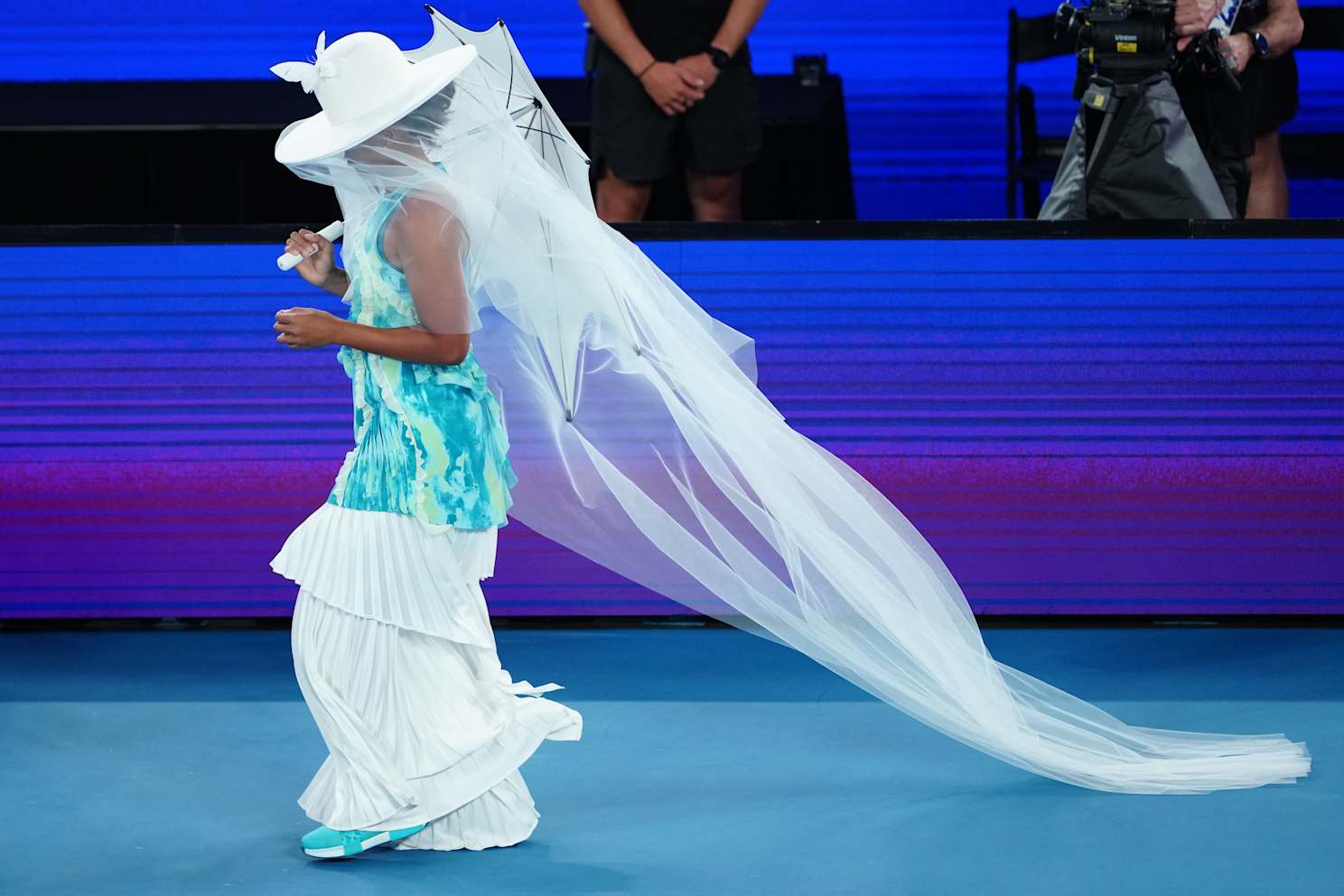 Naomi Osaka is a Japanese tennis player with a Haitian father who grew up in the United States, a four-time Grand Slam champion and the first Asian player ever to hold the world No. 1 ranking, whose career is as much a story about courage off the court as power on it.
Quick facts
- Born: Osaka, Japan; raised in Long Island, New York, then Broward County, Florida
- Heritage: Haitian father, Leonard François, from Jacmel, Haiti, and a Japanese mother, Tamaki Osaka; raised in the United States
- Nationality: Japanese. She also held US citizenship until 2019, when she gave it up to play for Japan at the Tokyo Olympics.
- Events: Singles (primarily hardcourt)
- Grand Slam titles: Four: US Open (2018, 2020), Australian Open (2019, 2021)
- World No. 1: Ranked world No. 1 in women’s singles by the WTA for 25 weeks starting in January 2019, the first Asian player to hold the top ranking in singles.
- Daughter: Shai, born July 2023
- Current ranking: 17th in the world
Their story
Osaka was born in Japan to a Haitian father and a Japanese mother, and the family relocated to Long Island, New York, where her father began training Naomi Osaka and her sister, Mari, in tennis, inspired by the Williams sisters. After five years in New York, the family moved to Broward County, Florida, where the girls focused on tennis full-time, training on public courts during the day and being homeschooled at night.
She made her professional debut in 2012, aged just 14, without ever competing on the junior circuit. That choice alone signals something: she was not interested in the slow lane.
When her mother Tamaki’s father found out she was dating a non-Japanese man, he accused her of bringing shame upon the family. That is the household Naomi came from, one that already knew what it meant to defy expectation and carry on anyway.
Haitian, Japanese and raised in America
Her father, Leonard François, was born in Jacmel, on Haiti’s southern coast, and moved to the United States to study before meeting her mother in Japan. He was her first coach, and she has spoken proudly of her Black and Haitian roots throughout her career.
She visited Haiti in 2019 and was welcomed as one of the country’s own. When an earthquake struck Haiti in August 2021, she pledged all her prize money from the Western & Southern Open to relief efforts, and her Play Academy expanded to Haiti that year to get more girls playing sport. In February 2026 she wrote that she felt she needed to go back to Haiti soon.
What they have achieved
In 2018, Osaka captured her first two career titles: at Indian Wells, where she defeated three former world No. 1s, Maria Sharapova, Karolina Pliskova and Simona Halep, and then at the US Open, where she overcame Serena Williams in the final. That win made her Japan’s first ever Grand Slam tennis champion.
At the very next major, Osaka battled through to the 2019 Australian Open final, and after squandering three match points in the second set, took the decider to complete back-to-back Slam triumphs and rise to world No. 1.
She completed a second US Open and Australian Open double in 2020 and 2021, establishing herself as a global superstar and a symbol of diversity. She was also chosen as the final torchbearer at the opening ceremony of the Tokyo Olympic Games.
Beyond the game
Osaka’s impact outside of tennis is where her story gets genuinely remarkable.
She withdrew from the 2020 Cincinnati Open to raise awareness for the shooting of Jacob Blake, and for the 2020 US Open wore masks displaying the names of several Black Americans who were victims of police brutality, including Breonna Taylor, Ahmaud Arbery, Trayvon Martin and George Floyd.
Then came the moment that changed professional sport’s conversation about mental health. Osaka withdrew from the 2021 French Open, one day after being fined $15,000 and threatened with suspension for refusing to appear at press conferences, writing that those media appearances caused “huge waves of anxiety.” She revealed she had “suffered long bouts of depression since the US Open in 2018.” Swimmer Michael Phelps, who has spoken openly about his own mental health struggles, told her that by speaking up she may have saved a life.
Her Play Academy, set up with Nike and Laureus, funds sport programs for girls in Japan, Haiti and Los Angeles.
In her own words
On the 2021 earthquake in Haiti:
“Really hurts to see all the devastation that’s going on in Haiti, and I feel like we really can’t catch a break. I’m about to play a tournament this week and I’ll give all the prize money to relief efforts for Haiti. I know our ancestors blood is strong we’ll keep rising.”
On visiting Haiti in 2019:
“It was really one of the warmest welcomes I’ve ever had, if not the warmest.”
On stepping away:
“I kind of felt like it was necessary, but I kind of felt ashamed in that moment. As an athlete, you’re told to be strong and push through everything. I think I learned that it’s better to regroup and address the feelings that you have in that moment, and you can come back stronger.”
On what’s next:
“I have a lot of goals going forward. For as long as I can play, I really want to win Wimbledon and Roland Garros and get a career grand slam.”
The comeback
Osaka took a 15-month break to give birth to daughter Shai in July 2023, then returned to play in 2024. The latest proof of her return to the very highest level came at the 2025 US Open, where she reached the semifinals of a Grand Slam for the first time in four years. Her 2026 season has showcased deeper runs more consistently, going further on surfaces that are not her favorite hardcourt, with a quarterfinal at Wimbledon and a final in Bad Homburg as the highlights. In 2024 she won 20 matches, 25 in 2025, and 28 in 2026 so far. She is not chasing who she was. She is becoming something more complete.
Who is AJ Dybantsa?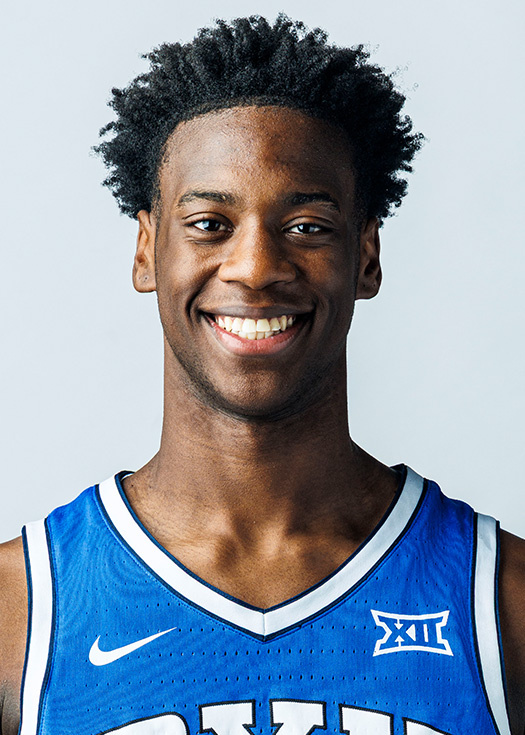 AJ Dybantsa is an American basketball forward from Brockton, Massachusetts, selected No. 1 overall in the 2026 NBA Draft, widely considered one of the most gifted prospects the sport has produced in a decade.
Quick facts
- Born: Brockton, Massachusetts, to a Jamaican mother, Chelsea, and a Congolese father, Ace Dybantsa
- Height: 6 feet 9 inches, 220 pounds
- College: BYU (Brigham Young University), one season
- Draft: No. 1 overall pick, 2026 NBA Draft, selected by the Washington Wizards
- Scoring average: 25.5 points per game, leading the entire nation in his lone college season, along with 6.8 rebounds and 3.7 assists per game
- Awards: Big Dream 12 Freshman of the Year, Newcomer of the Year; finalist for the Naismith and Wooden National Player of the Year
- International gold: Three gold medals with Dream Team USA, including MVP of the 2025 FIBA U19 Men's World Cup in Switzerland. FIBA, the International Basketball Federation, runs the sport's global competitions.
- Foundation: The AJ Dybantsa Foundation, focused on education and sending kids to school in the US and in the Democratic Republic of Congo
Their story
Dybantsa did not grow up dreaming of the NBA. His father brought home a Spider-Man mini hoop when AJ was five, and basketball was just something fun he played with friends through elementary school. The turning point came during the COVID-19 pandemic, when he was 13. While the world was shut down, his father drove him an hour and twenty minutes each way, every single day, from Brockton to Middletown, Rhode Island, for workouts.
"Leading up to that I kind of just played for fun," he told NBA.com. "When COVID hit and everyone was inside, that's when things changed for me. I just ended up loving the workouts and when we came back from COVID and was allowed back in the gym, I had a growth spurt and I kind of knew I was better than everyone and that triggered everything."
He hit the national radar in his high school freshman year, was ranked the No. 1 prospect in the country by ESPN, reclassified a year early to enter college sooner, and chose BYU over North Carolina, Kansas State, Texas Tech and several other top programs. His reason was direct: BYU head coach Kevin Young had spent a decade in the NBA, including as associate head coach of the Phoenix Suns, and built his staff with people from NBA franchises. Dybantsa wanted a college program structured like a professional one.
What they have achieved
In his single college season, he became the first player since Larry Bird did it for Indiana State in 1978-79 to average 25.5 points, 6.8 rebounds and 3.7 assists in a season and be named a consensus All-American. During the Big 12 Tournament, he scored 93 points across three games, breaking Kevin Durant's Big 12 tournament scoring record. BYU made the Sweet 16.
NBA.com's scouting projection describes him as "a high-usage, multi-level scoring wing" whose combination of size, coordination and midrange shotmaking draws comparisons to Jaylen Brown, DeMar DeRozan and a larger version of Tracy McGrady.
Off the court, he runs shoe giveaways and back-to-school supply drives at his old elementary school in Brockton, and is committed to finishing his degree online at BYU while playing in the NBA.
In his own words
On choosing BYU:
"My ultimate goal is the NBA and after they hired Kevin Young, they hired a strength coach from the Milwaukee Bucks, a dietitian from the Suns, analytics from the Suns. He just started stacking prototypes around us and I wanted to learn in the best environment to prepare for the league."
On entering the draft:
"Now the work starts again, all over again. I've had a lot of NBA players tell me that it kind of restarts once you get there."
On what awaits him:
"Everyone always says when you get up to the NBA, it's a little different. The IQ level is different, the pace and physicality. But I can't wait and it's something I've worked my whole life for."
Worth knowing
He grew up a Boston Celtics fan in Brockton, the same city that produced heavyweight champion Rocky Marciano. His parents are immigrants, his mother from Jamaica and his father from the Democratic Republic of Congo. He announced his draft declaration at the elementary school in Brockton where he went from kindergarten through 8th grade, surrounded by the kids his foundation serves. That is the detail that stays with you: the same room where it all started, and he chose to make that announcement there.
What did Ace Dybantsa do to help AJ become the number 1 draft pick? Ace Dybantsa gave up his law enforcement career to become his son AJ's full-time manager, trainer, protector and toughest teacher, building the whole architecture around a kid who could easily have been distracted into squandering his gift.
 spio.com
The career he walked away from
Ace Dybantsa left behind his law enforcement career to manage AJ's basketball career full time. Born in Brazzaville, Republic of Congo, Ace was raised on education and respect. He moved to France as a teenager, then came to the United States for college soccer opportunities. He and Chelsea, AJ's mother, eventually met in the parking lot of a gym in Massachusetts. None of that background is basketball. What he brought to his son was something older: the conviction that structure produces character, and character produces champions.
Discipline before everything
AJ says his parents are strict. Education comes first. That was not abstract. When AJ was playing AAU ball, Ace drove him more than five hours to a tournament in Philadelphia, then forbade him from taking the court because of a setback in the classroom. AJ spent the entire weekend watching from the sidelines. In the city of brotherly love, he received a life-changing dose of fatherly discipline. "From that point on, there was nothing but honors on AJ's report card," Ace told reporters at the NBA Draft. "AJ excelled in basketball, and here we are today."
Routines at home included doing push-ups twice daily, monitored by a camera system Ace installed to ensure no shortcuts were taken.
The manager who never hired an agent
Ace has an outsized role in his son's career, managing everything AJ does off the court. Going into the draft, there was no certified NBA agent in the picture. That role was filled by Ace, and his logic was simple. He also protected AJ from agents trying to take advantage early, and that vigilance helped AJ stay focused solely on consistently improving his game. Ace even planned to move to Washington Wizards with AJ after the draft, traveling to his son's new home city and planning to live with him.
Moving schools to find the right environment
Ace moved AJ from Massachusetts to Prolific Prep, an elite high school basketball academy in Napa, California, for his junior year, then became disillusioned with the administration and moved him again. That second move led, almost by accident, to BYU. They visited Utah Prep in Hurricane, Utah, and a coach there suggested they stop at Brigham Young University on the way to the airport, informing BYU coach Kevin Young that AJ Dybantsa's parents would be on campus. The rest of that story is in the record books.
What it actually produced
Together, Ace and Chelsea raised a son so fluent in the social media age that he fronts global brands like Nike, Red Bull and Fanatics as an 18-year-old. Ace also felt that learning to navigate adversity at BYU was just as crucial for AJ's development as reaching his peaks. "He handled challenges right, AJ is the ultimate team player," Ace said. That team-first quality, in a player the whole country was watching, is not accidental. It is what a father who quit his career and moved across the country, twice, tends to build.

The books


The most inspiring athletes are the ones whose stories are bigger than their trophies, like N’Golo Kanté, who paid for a $5 million medical center in Mali for children and families who can’t afford care, and Giannis Antetokounmpo, who shared one pair of sneakers with his brother; here are 100 of them from every sport and continent.
Read that one firstBuild something that outlasts the record.
Mary posts daily on CEEK for a community of people who are creating, building and figuring out what comes next.
Join me on CEEK
Comments
Comments are public. Links are removed.